
Why are we working on this?
Excluding children from voting is undemocratic. Under-18s make up almost a third of the world's population, yet most have no say in the laws that govern their lives or in choosing who gets to make them. Only a few countries allow 16-year-olds to vote in national elections, and no country allows anyone younger to vote.
Children’s political exclusion has lasting consequences. Decisions made today on issues such as the environmental crisis and public debt create long-term disadvantages, shaping children's lives in ways that later policy cannot undo.
Without the vote, children cannot elect political representatives to defend their interests. Instead, children advocate for change through protest, civil disobedience, and volunteering on a variety of issues (including climate, education, gun control, peace, labour and LGBTQ+ rights). Some also take part in policy consultations, but these opportunities are few and are run on adults' terms. Ultimately, children want to participate in democracy – and being denied the vote is a major reason their rights go unfulfilled.
Grassroots movements are campaigning to remove the minimum voting age. But children's right to vote is still largely ignored in mainstream debate, including by human rights and children's rights organisations.
What do we want to achieve?
We want everyone, of any age, to be able to vote when they choose to and are able to register. We don’t just believe in lowering the voting age to 16, but are making the case to remove the minimum voting age entirely.
CRIN wants to bring children's right to vote into the mainstream, so it can be debated as a serious question of democracy. We hope to do this by challenging the myths used to deny children the vote, setting out the legal principles that support it, and proposing practical ways to make it happen.
Age restrictions based on children’s perceived lack of capacity are arbitrary and ignore the wide range of skills and competencies possessed by different children. That a child is interested in politics is indication enough of their ability to vote.
‘Letting kids participate in democracy would send a powerful message: your voice matters. Voting would become a habit if kids grew up doing it, making for more informed, engaged adult citizens. That alone could change the world.’ — Charlotte, aged 15, United States of America
What are we doing so far, and how?
CRIN has argued for children's right to vote for many years, as part of our wider work challenging arbitrary minimum ages. However, we now want to build on that work and push this issue into public discourse.

Publishing research to spark conversation
Our latest report, 'The Choice That Matters: Why children should have the right to vote' (to be published November 2026), makes the case for the right to vote for all under-18s. We argue that children are political beings and their right to vote needs to be taken seriously.
Our discussion paper, 'Age is Arbitrary' (2019), makes the case against setting minimum ages based on assumptions about children's capacity (including their capacity to vote).

Coordinating a global network
In 2025, we founded a global community of practice that brings together more than 250 researchers, practitioners and advocates from 49 countries across six continents – all working on children's rights, civic education and democracy.

Asking children what they think
We are inviting children and young people to discuss what having the right to vote would mean to them through our 'Book Club' questions.
How can we make this happen?
In short, we need to work together. Children's right to vote is still a growing field in children's rights advocacy, and we want to learn from those already leading the conversation, as well as the children and young people at the front of the movement.
If you're working on children's right to vote or want to be involved, we'd love to hear from you. Contact us at info@crin.org or reach out to katie@crin.org to join our Children and Democracy Network.
Key resources

Our Manifesto for Children’s Right to Vote
Related areas of focus
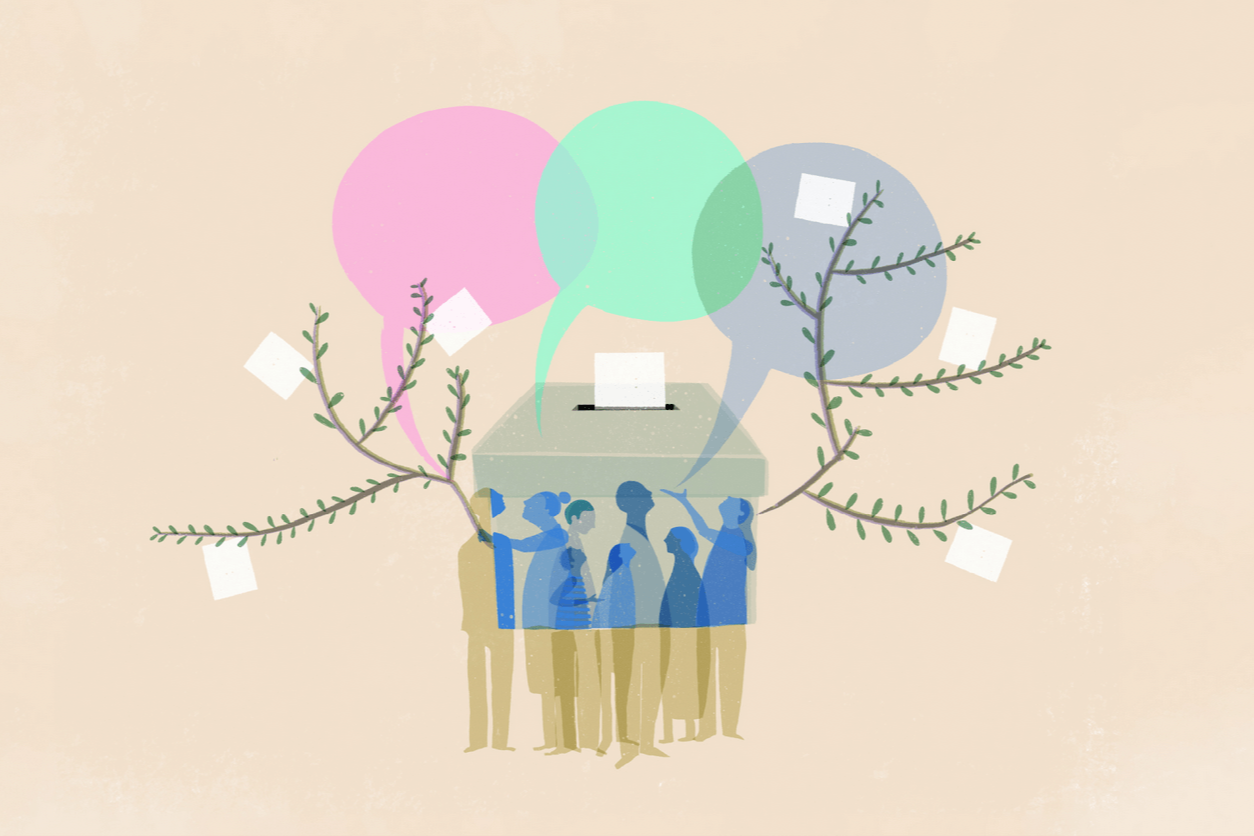
Children’s rights and democracy
Read more on this here.
This includes our work on deliberative democracy.

Children’s access to environmental justice
Read more on this here.
